In my recent book, the Ottoman Ibadis of Cairo, I used the library of the Ibadi trade agency, school, and library known as the Wikālat al-Jāmūs (what I call the ‘Buffalo Agency’) to tell the social history of the Ibadi community in Ottoman-era Cairo from the 17th to the 20th centuries. One of the keys to telling that story was the rich collection of ownership and endowment statements in surviving manuscripts from the Agency’s library, most of which are today located in private libraries in the Maghrib or Oman. One of the folks who left many manuscript notes behind was the Agency’s director during the mid-19th century, Saʿīd al-Shammākhī (d.1883), who would also go on to become the representative of the Bey of Tunis in Cairo.
في كتابي الأخير، الإباضية العثمانيون بالقاهرة، استعملت مكتبة الوكالة التجارية المدرسة العلمية المعروفة بـ”وكالة الجاموس” لأكتب تاريخ المجتمع الإباضي الاجتماعي في القاهرة أبان العصر العثماني من القرن 17 إلى القرن 20 م. أحد مفاتيح كتابة هذا التاريخ كان مجموعة الوقفيات والتمليكات الموجودة في هوامش المخطوطات المتبقية من مكتبة الوكالة التي توجد اليوم في مكتبات خاصّة في الدول المغاربية وعُمان. بين الشخصيات البارزة الذين تركوا آثارهم في هوامش المخطوطات، الشيخ سعيد الشماخي (ت 1883 م) يستحق بذكر خاصّ لأنّه كان مدير الأوقاف في الوكالة وأحد الأساتذة الكبار في مدرستها وأصبح فيما بعد وكيلا للباي التونسي في القاهرة
While participating as a trainer for the “Jerba Libraries Project” this summer, I had the opportunity to examine a manuscript originally from the Wikala’s library that al-Shammakhi used many times. I had been searching for this manuscript during the book project, so I was delighted to see it finally. The manuscript nicely encapsulates some of the main ideas of the book, so I wanted to share it here.
أثناء المشاركة في دورة تكوينية لمشروع مكتبات جربة هذا الصيف، كانت لدي الفرصة أن أطلع على مخطوط من مكتبة الوكالة قرأها سعيد الشماخي عدّة مرّات. كنت أبحث عن هذا المخطوط بالذات خلال القيام بالبحث للكتاب ولم أجده ولهذا فرحت عندما رأيته. يلخّص المخطوط الأفكار الرئيسة في كتابي بطريقة جميلة ولهذا أريد أن أقدّمه هنا
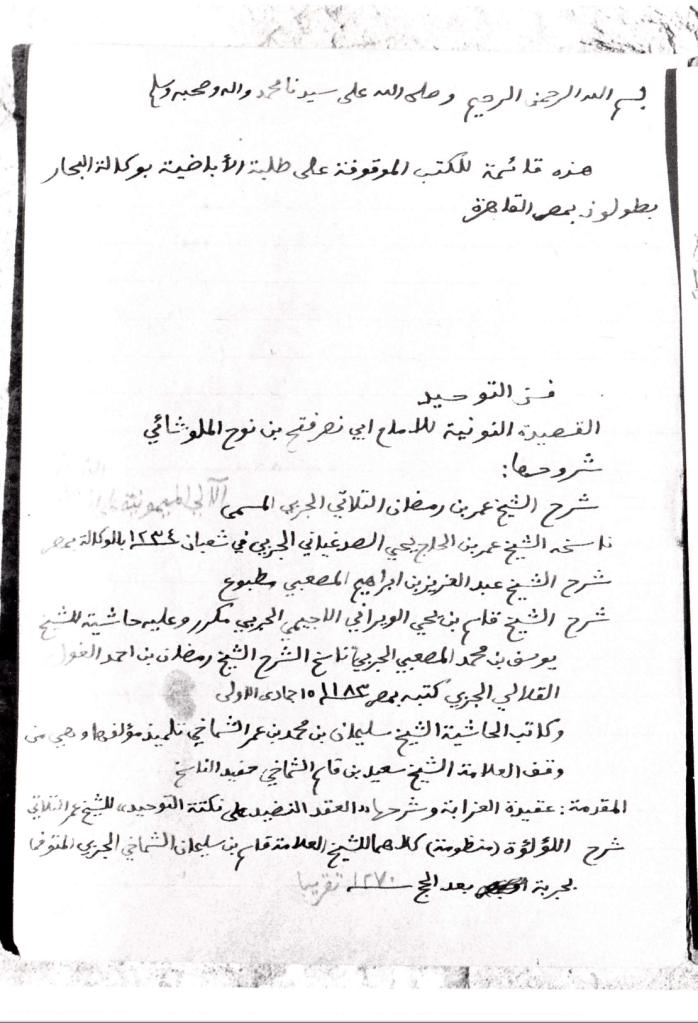
The book is part of a small but fascinating collection belonging to the Gouja family in Djerba. It likely came into their possession through the historian Sālim Bin Yaʿqūb (d.1991), who collected many manuscripts and fragments from the Buffalo Agency while in Cairo in the 1930s. When he returned to Djerba, he brought those with him. He likely brought this manuscript to Djerba, since he included it in a handlist of books still held at the Agency during his time in Egypt (see image below)
ينتمي المخطوط إلى مجموعة من المخطوطات في حوزة عائلة قوجة في جربة. الأرجح أنّ المخطوط وصل إلى العائلة عن طريق الشيخ سالم بن يعقوب (ت1991م)، مؤرّخ وعالم إباضي في جربة. كان الشيخ سالم في القاهرة في الثلاثينيات من القرن الماضي حيث جمّع الكثير من الوثائق والمخطوطات من مكتبة الوكالة وجاء بها عند عودته إلى جربة. وهو ذكر هذا المخطوط بالذات في قائمة من الكتب الموقوفة على وكالة الجاموس (انظر الصورة ادناه)
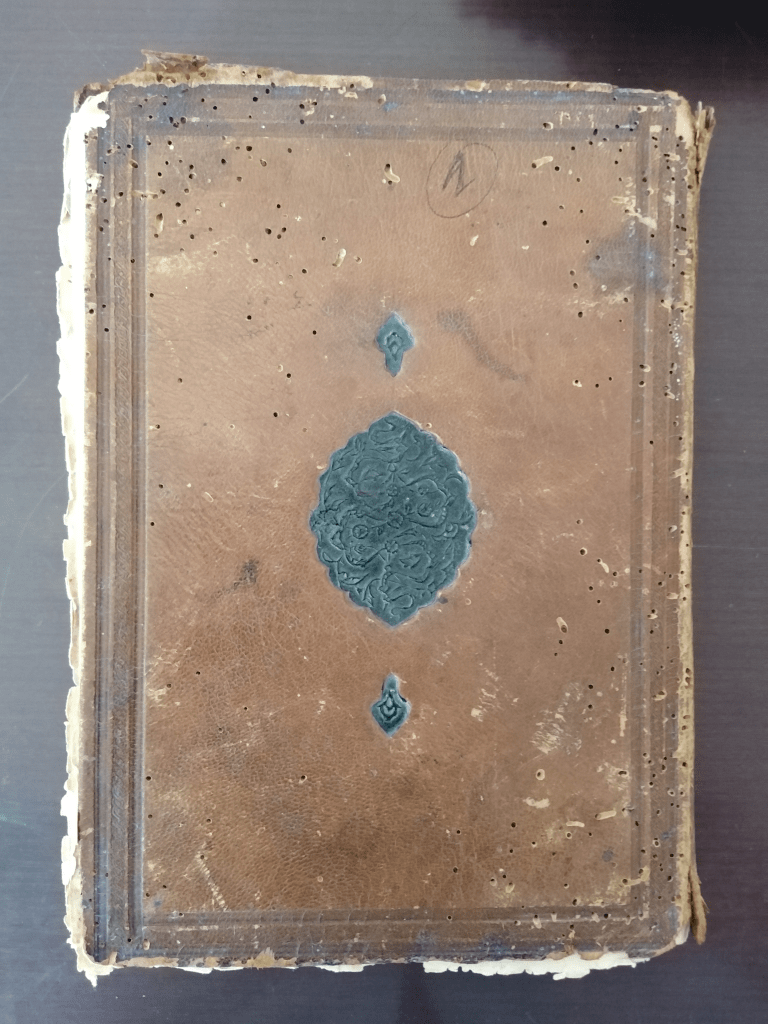
The handsome leather binding was typical of Ottoman-era manuscripts in the Wikala’s library, following the aesthetic norms of the time such as the mandorla design on its front and rear covers. Also typical of the book was that it was copied in Maghribi script in Cairo, since it was the Maghribi Ibadi community who lived and studied there while also usually studying at the al-Azhar Mosque.
تجليد المخطوط على غرار المخطوطات المتداولة في العصر العثماني في القاهرة وهو مماثل للكتب الأخرى في مكتبة الوكالة. الخط هو الخط المغربي وشأنه شأن أغلبية المخطوطات الإباضية في مكتبة الوكالة لأنّ الطلبة والعلماء الإباضية الذين سكنوا الوكالة نسخوا الكثير من الكتب عند الإقامة فيها وهم يدرسون الجامع الأزهر.
The two main texts (mutūn) of the manuscript are also representative of the Wikala’s main function as a complementary institution of education for Ibadi students at al-Azhar. The Kitāb al-Īḍāḥ was a primer of Ibadi fiqh used as a textbook, of which there were at least two dozen volumes at the Wikala’s library. The marginal gloss (hashiya) on the text, authored by one of the earliest long-term scholarly residents of the Agency, Muḥammad Abū Sitta al-Sidwīkshī (d.1670), was also a standard text used in instruction.
كذلك تعكس متون المخطوط دور الوكالة التعليمي المتكامل للدراسة في الأزهر حيث كان الطالب الإباضي يدرس النصوص السنية فقط. النص الأول هو “كتاب الإيضاح” وكانت توجد أكثر من عشرين نسخة في مكتبة الوكالة. النص الثاني في المجلد هو حاشية على كتاب الإيضاح لأحد المقيمين في الوكالة الشيخ محمد أبو ستة السدويكش (ت1670م). هذان النصان كانا مهمّان جدا للتدريس في الوكالة لأنّهما بمثابة مدخل شامل للفقه الإباضي
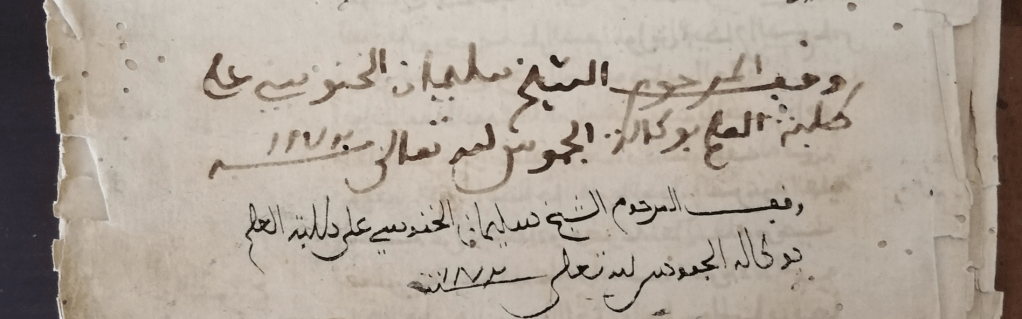
As for these specific copies, they were both copied in the mid-18th century, during one of the most important periods of growth for the Wikala’s library and an important period of growth for Cairene manuscript culture, more generally. Both texts also bear the endowment statement of Sulaymān al-Khanūsī, a long-term Ibadi resident in Cairo from the island of Djerba. He donated his entire private library to the Wikala following his death, significantly enriching its collections. This was typical of the Ibadi merchant community in Ottoman-era Cairo, who like their Sunni counterparts purchased and endowed books for the benefit of students at madrasas.
بالنسبة لهذا المخطوط فهو نُسخ في أواسط القرن الثامن عشر الميلادي خلال فترة تعدّ من أهم الفترات التاريخية لإنتاج المخطوطات عند الإباضية المغاربيين خاصّة وفي القاهرة العثمانية عامة. يحمل النصّان وقفية من مكتبة الشيخ سليمان الخنوسي، تاجر جربي سكن في القاهرة لمدّة طويلة وهدا مكتبته للوكالة بعد وفاته. كان هداء المخطوط عادة متداولة عند الإباضية التجار في القاهرة العثمانية وشأنهم في ذلك شأن نظرائهم من السنة الذين اشتروا وأوقفوا كتبا للمدارس والمساجد

Over the course of the next two centuries, this manuscript would be joined by many other manuscript (and later print) books on the shelves of the Wikala. Among its many users in the second half of the19th century would be Saʿīd b. Qāsim al-Shammākhī (d.1883). Originally, from Djerba, al-Shammākhī served as the director of endowments at the Wikala and taught there for many years before going on to become the representative (wakīl) of the Bey of Tunis in Cairo. He left his mark on many of the Wikala’s manuscripts, including this one.
عبر القرنين التاليين، قرأ هذا المخطوط الكثير من المقيمين في الوكالة ومنهم الشيخ سعيد بن قاسم الشماخي (ت 1883م). أصلا من جربة، كان هذا العالم طالبا وثمّ أستاذا في الوكالة والمدير لأوقافها قبل أن أصبح وكليل الباي التونسي في القاهرة. ترك آثاره في مخطوطات كثيرة في الوكالة ومن ضمنها هذه نسخة من كتاب الإيضاح
Alongside a loan statement on the interior of the front cover, he also left copious notes in the margins of the book (see image). These explanatory note show how engaged he was with the text, which he both studied and taught at the agency on more than one occasion. And how do we know that? Because he tells us so in the margins.
إضافة إلى تقييد الاستعارة في داخل غلاف المخطوط، ترك الشماخي ملاحظات كثيرة في هوامش الكتاب (انظر الصورة) تثبت عمق تعامله مع النص الذي درس ودرّس في الوكالة مرات كثيرة. وكيف نعرف أنّه قرأه درّسه؟ لأنّه يعلمنا بذلك في الهامش
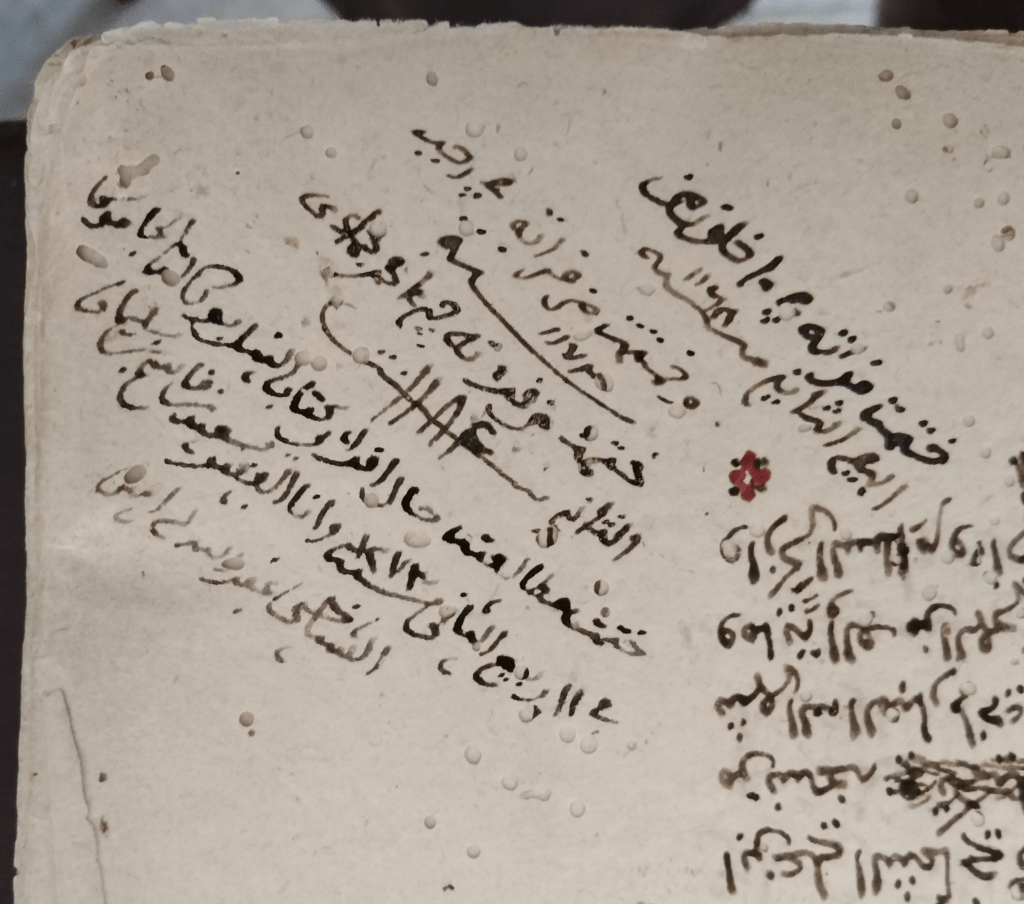
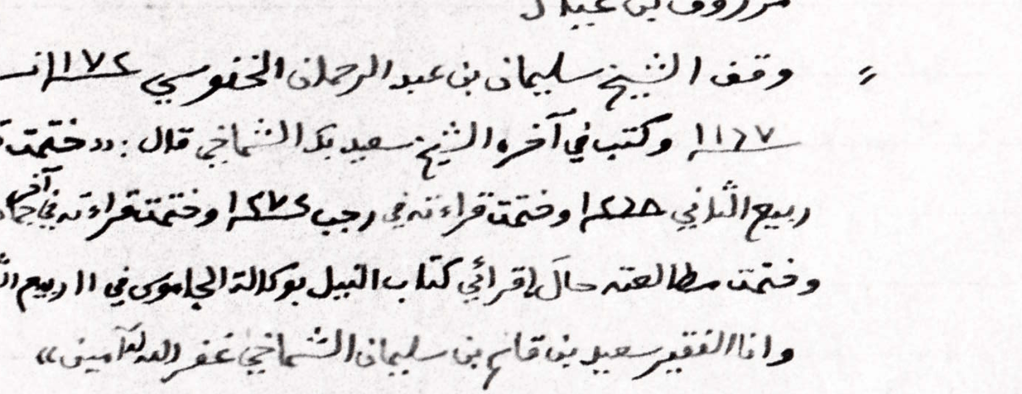
At the end of the manuscript, he made a note each of the three times he finished reading the book at the Wikala (roughly once a decade, 1167 / 1173 / 1184 AH). He also added a note that he finished reading it yet again, while also teaching another well-known Ibadi text used for teaching, the Kitāb al-Nīl by ʿAbd al-ʿAzīz al-Thamīnī (d.1808). Al-Shammākhī had a personal connection to this last book, since his grandfather Sulaymān had been the first person in Djerba to copy it. The same manuscript note appears in the handlist of manuscripts still at the Buffalo Agency in the 1930s, written by Sālim Bin Yaʿqūb (below). This further suggests it was he who brought it to Djerba.
كل ما يكمل القراءة، كان يترك تقييدا في آخر المخطوط. يبدو أنه أعاد قراءته ثلاث مرّات على الأقل، تقريبا مرّة كل عشر سنوات. في التقييد الأخير، أضاف أنّه أكمل القراءة وهو يدرّس”كتاب النيل” لعبد العزيز الثميني (ت 1808م). كانت للشماخي صلة خاصّة لهذا الكتاب لأنّ جدّه كان أول من نسخ الكتاب في جزيرة جربة. تظهر هذه التقييدات حرفيا في قائمة الشيخ سالم بن يعقوب من الثلاثينيات وهذا يدلّ على أنّه جاب المخطوط إلى جربة (انظر الصورة ادناه)
Following the closure of the Wikala in the 20th century, this and many other titles from its library made their way to Djerba, as well as to Algeria, Libya, and Oman. Today held in a private library in Djerba, it likely circulated internally among the island’s many private collections in the mid-20th century. The text and its hashiya, the origins of the manuscript at the Wikala, its endowment, its use in instruction, and its final journey from Cairo to Djerba together encapsulate much of the history of the Ibadi community of Ottoman-era Egypt from the 17th to the 20th centuries.
بعد إغلاق أبواب الوكالة في أواسط القرن العشرين هذا المجلّد والمخطوطات الأخرى من الوكالة انتشرت إلى عُمان وتونس والجزائر وليبيا وغيرها. يبدو أنّ المخطوط هذا تنقلت بين المكتبات الخاصّة بجربة في القرن العشرين حيث استفاد منه العلماء والطلبة. من خلال النص وحاشيته، الوقفية، استعماله في التدريس، ورحلته الأخيرة من مصر إلى جربة، قصّة هذا المخطوط تلخّص لنا تاريخ المجتمع الإباضي في القاهرة في العصر العثماني
 Ibadi Studies | دراسات إباضية