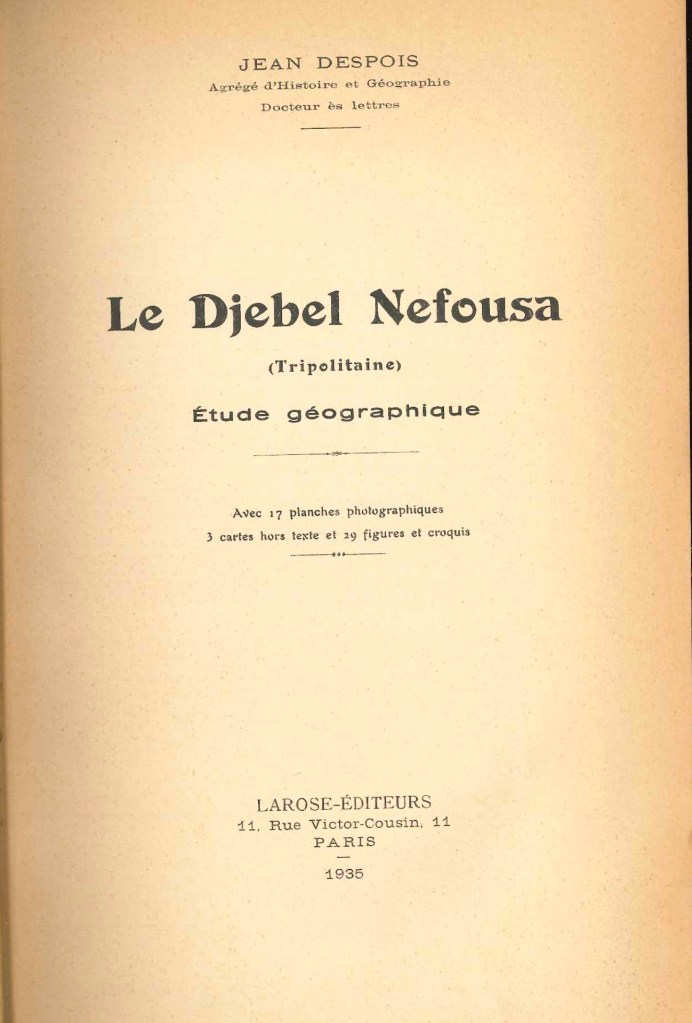
As I continue work on the history of the Jebel Nafusa, I like so many others before me have been engaging with the works of French geographer Jean Despois (1901-1978). Originally from France, Despois had been living in Tunis since 1924, teaching at the Collège Sadiki and editing the Revue Tunisienne. In 1935, Despois published his geographical study entitled Le Djebel Nefousa (Tripolitaine): Étude géographique. The study was one of a series of publications to result from his doctoral fieldwork in the Jebel Nafusa, which he carried out in 1932-33. I will be focusing on his work for the next few weeks and wanted to share a short post on a document relating to his fieldwork that I ran across recently.
أقوم بالبحث حاليا عن تاريخ منطقة جبل نفوسة (ليبيا) في بداية القرن العشرين وكما فعل الكثيرون من قبلي، أقرأ أعمال الجيوغرافي الفرنسي جان دي پوا (1901-1978م). ولد دي پوا في فرنسا ولكنه انتقل إلى تونس في 1924 حيث درّس في المدرسة الصادقية وحقّق المجلّة التونسية. في عام 1935م، نشر دي پوا كتابه بعنوان جبل نفوس (طرابلس): دراسة جيوغرافية. كانت الأولى في مسلسل من الدراسات الناتجة عن عمله الميداني للدكتوراه في جبل نفوسة، الذي قام به في عام 1932-33م. سأركّز في الأسابيع القادمة على أعماله وأردت أن أكتب قليلا هنا عن وثيقة متعلّقة بعمله عثرت عليها
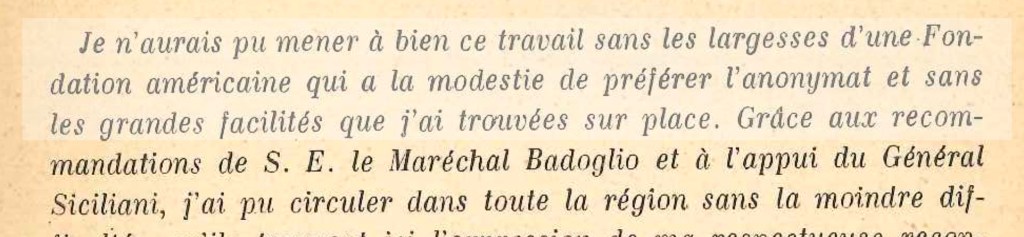
In the introduction to Le Djebel Nefousa, he wrote that his work was supported by an American organization which wishes to remain unnamed (see photo). Alongside his many notes of thanks to Italian colonial officials from the government and the military, I found this note intriguing. What was this “American foundation”?
في مقدمة جبل نفوسة، كتب دي پوا أنّ عمله دُعم من قبل مؤسّسة أمريكية تفضّل عدم الكشف عن هويتها (انظر الصورة). بالإضافة إلى كل تقييداته وهو يشكر ضوابط وعسكريين وإداريين إطاليين، أثار هذا التقييد باهتمامي: ما هي هذه المؤسّسة الأمريكية؟
Many years later, the author of his Wikipedia page (who appears to be his son), decided to name them, specifying that the fieldwork for the thesis was supported by the Rockefeller Foundation. A quick search on their digital archives yielded the document displayed here, which I found interesting and wanted to share.
بعد سنوات طويلة، صاحب صفحته في ويكيپيديا (ويبدو أنه ابنه) قرّر الكشف عن هوية المؤسسة الأمريكية عندما كتب أنّ العمل الميداني كان يمكن بفضل الدعم من مؤسّسة “روكافالار” الأمريكية. قمت ببحث سريع في أرشيف المؤسسة الرقمي وأسفر البحث عن الوثيقة التالية
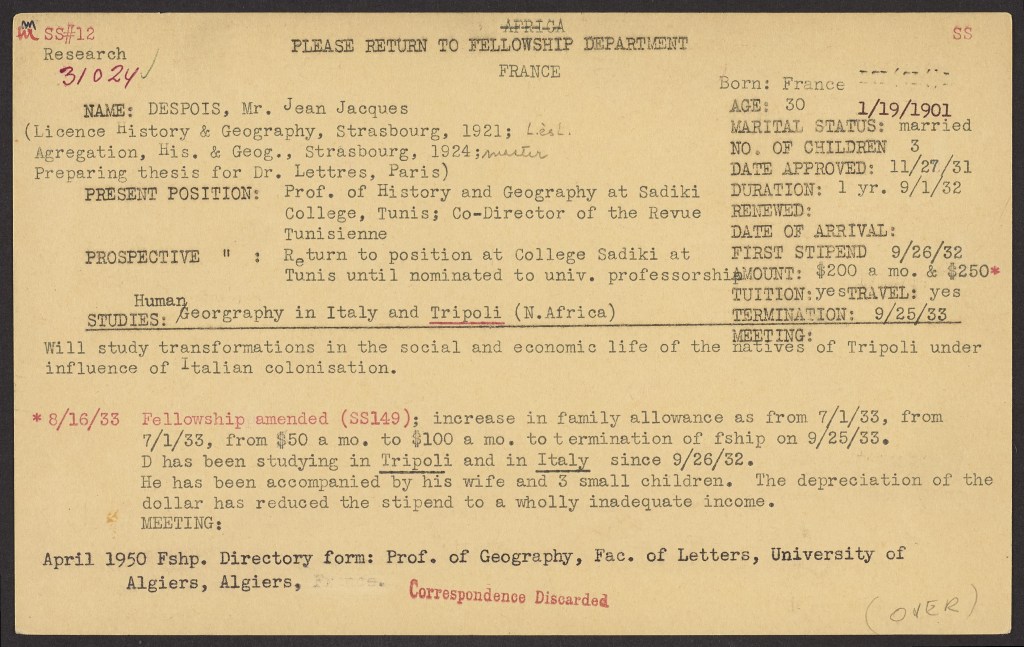
I was interested in a few details of this document, which offer insight into Despois’ fieldwork that would really never have been possible to know without it. The first is that we learn that Despois was based in Tripoli during his fieldwork in 1932-33, accompanied by his wife and three children. The second is that we know the precise amount he received for his funding ($200 USD/month, later increased by $50 USD to account for the “depreciation of the dollar[, which] ha[d] reduced the stipend to a wholly inadequate income.” We also learn that he intended to return to Tunis, which indeed he did the following year, after accepting a new position at the Lycée Carnot. In 1937, he joined the prestigious Faculté des Letters d’Alger and took over the editing of the Revue Africaine in 1941. He would leave Algiers for the Sorbonne in Paris in 1957, just as the Algerian Revolution was beginning.
أثار لاهتمامي بعض التفاصيل في هذه الوثيقة التي تلقي الضوء على عمل دي پوا الميداني. أولا، نتعلم أنّه كان ساكنا في مدينة طرابلس خلال فترة العمل الميداني في 1932-1933م ومعه زوجته وأطفاله الثلاث. ثانيا، نكتشف أنّ الدعم كان بمبلغ 200$ دولار أمريكية (وثم ارتفع بخمسين دورلار نظرا لانخفاض قيمة تلك العملة). نتعلم كذلك أنه نوى الرجوع إلى تونس وفعلا رجع في السنة التالية بعد قبول منصب جديد في معهد كارنو. في عام 1937، التحق بكلية الآداب في الجزائر وتولى تحقيق المجلة الإفريقية في عام 1941م. خرج من الجزائر لجامعة سربون في باريس عام 1957 بعد بداية الثورة الجزائرية
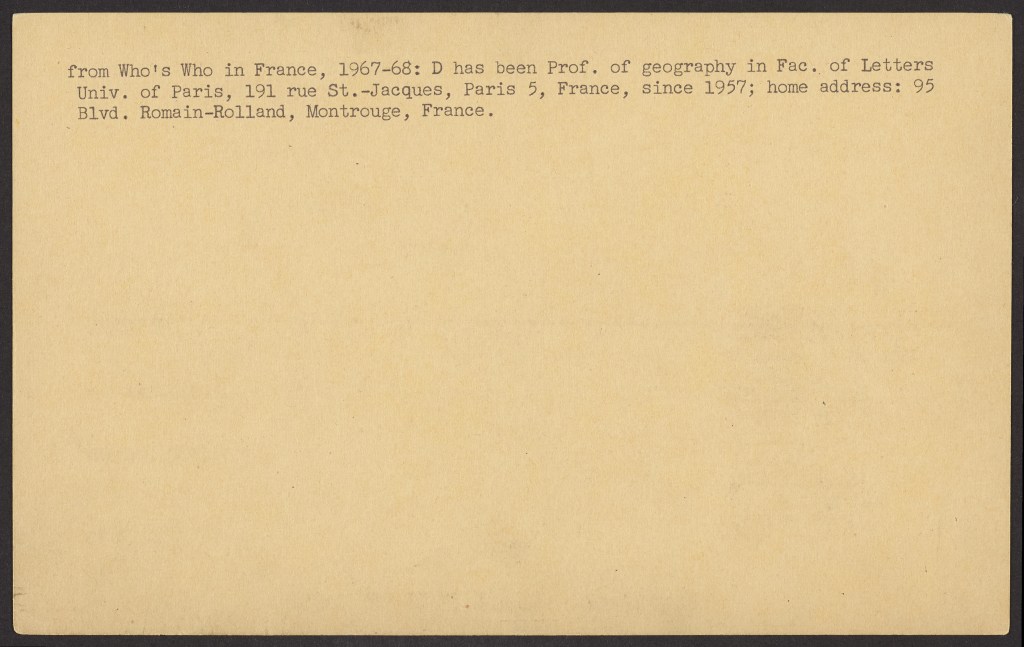
This card may not have radically changed what I knew about Despois, but it is a reminder of the key role digital archives play (hooray for archives!) in contextualizing the historical works on which we rely for our own research.
لم تغيّر لي هذه الوثيقة كل ما أعرفه عن دي پوا ولكنها تذكّرني بالدور الهام الذي تلعبها الأرشيفات الرقمية (تحيى الأرشيفات!) في مساعدة البحث وتوضيح سياق وثائقنا التاريخية التي نستعملها في بحثنا يوميا
 Ibadi Studies | دراسات إباضية