I recently had the opportunity to look at the PhD thesis of Elizabeth Savage, the author of one of the few treatments in English of the early history of the Ibadi communities of North Africa: A Gateway to Hell, A Gateway to Paradise: The North African Response to the Arab Conquest (1997). I read this book before graduate school and I credit it, along with Amr Khalifa Ennami’s Studies in Ibadism, with getting me interested in Ibadi history. Savage insisted on understanding the Ibadi corpus as a “cumulative tradition” and this was a key starting place for my own dissertation and has continued to shape how I think about Ibadi manuscript traditions. For some reason, though, I never thought to look at the PhD thesis on which Savage’s book was based.1
كانت لدي الفرصة مؤخرا أن أطلع على أطروحة الدكتورة إليزاباث سافاج، صاحبة أحد الدراسات النادرة حول تاريخ المذهب الإباضية في شمال إفريقيا باللغة الإنجليزية. قرأت الكتاب الذي نجم عن الأطروحة منذ سنوات طويلة وأعتقد أنه (إضافة إلى كتاب د.عمرو خليفة النامي، دراسات إباضية) كان له تأثير كبير على اهتمامي بالموضوع. شّددت سافاج في كتابها على أهمية فهم التراث الإباضي المكتوب كـ”تراث متراكم” وهذه كانت نقطة البدء لبحثي في أطروحتي وكان وما يزال يؤثر على طريقة فهي لثقافة المخطوطات عند الإباضية. ولكنه لم يتبادر لذهني في ذلك الوقت أن أقرأ الأطروحة التي كان يبنى عليها الكتاب
In this post, I want to take a moment to observe a few fun coincidences and my unrealized indebtedness to Dr. Savage and her work.
إذاً، هنا أريد أن أدوّن بعض الملاحظات حول الأطروحة بما في ذلك كيف كنت وما زلت مدينا لأعمالها وبعض الصدفات المثيرة للاهتمام
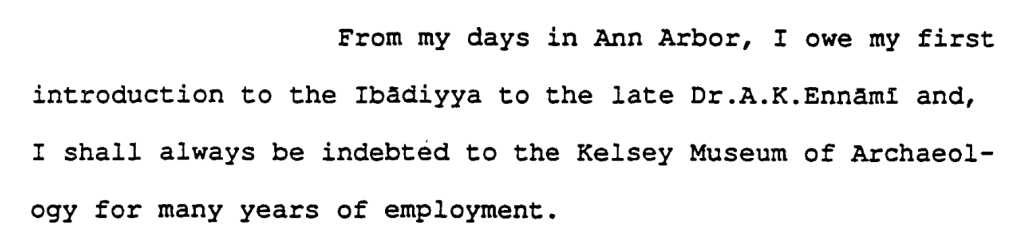
I wrote a post ten years ago about Dr. ‘Amr K. Ennami and his time at the University of Michigan in the 1970s. I may have known in the past and forgotten, but in reading Savage’s thesis I was struck to find that she had overlapped with Ennami at Michigan and it was he who introduced her to Ibadism. In the acknowledgements, she notes that it was Ennami who introduced her to Ibadism:
منذ عشر سنوات كتبت حول الوقت الذي قضاه د. عمرو خليفة النامي في جامعة ميشيغان في السبعينيات من القرن الماضي. يمكن أنّني عرفت هذا وفقط نسيته ولكني خلال قراءة أطروحة سافاج، صدمني أنّها كانت في جامعة ميشيغان وتداخلا هي والنامي هنالك. وفعلا، كان النامي الذي قدّمها إلى الدراسات الإباضية. في مقدمة الأطروحة، تذكره بالإسم وتتحدث عن دوره في اختيارها للموضوع:ـ
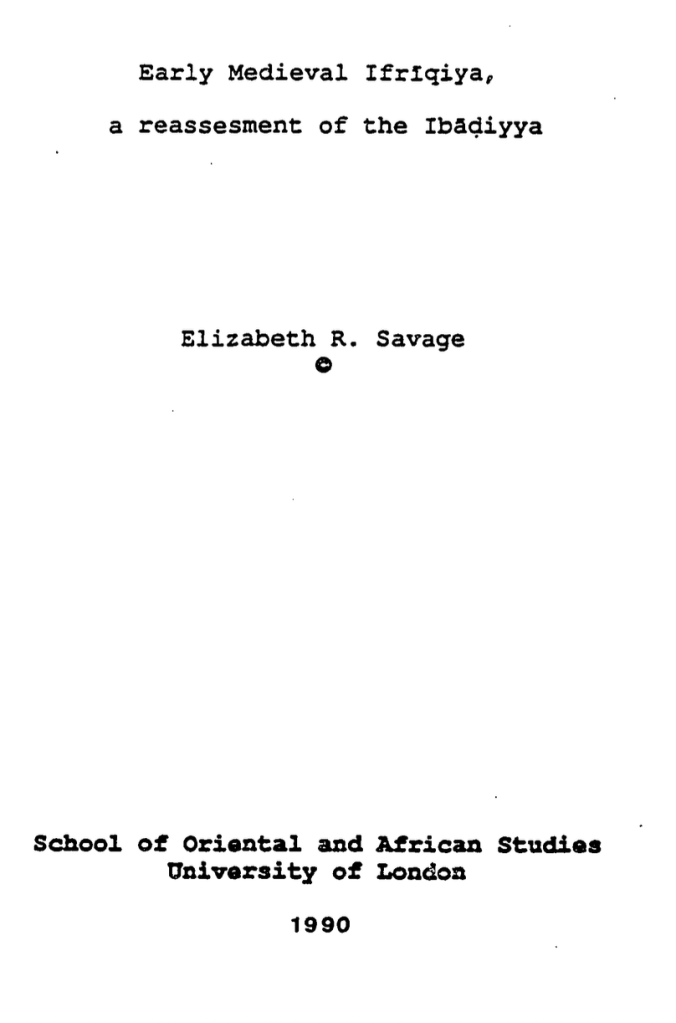
كانت سافاج تشتغل في متحف كالسي الأثري بجامعة ميشيغان لعدّة سنوات قبل بدء الدكتوراه. شاركت في الحفرتات الأثرية في سوريا ثم تحولت إلى ميدان التاريخ الإسلامي وبدأت برنامج الدكتوراه في ميشيغان. بعد النجاح في الامتحانات الشاملة، قضت وقتا في سوريا والسعودية قبل الرجوع إلى الدراسة في جامعة لندن للدراسات الشرقية والإفريقية حيث اشتغلت تحت إشراف المؤرخ ماكيل برات. أكمل رسالة الدكتوراه في سنة 1990 بالنعوان : “إفريقيا الوسيط المبكرة: إعادة النظر في الإباضية” ـ
Savage had been at Michigan for several years, both working at the Kelsey Museum of Archaeology and participating in some of Michigan’s excavations in Syria. She transitioned into the field of Islamic history and began working on a PhD at Michigan on the topic. After her prelims, she spent time Syria as a Fulbright scholar and in Saudi Arabia working at the Saudi Computer & Information Centre. She finally ended up at SOAS in London to work with Michael Brett. She completed her PhD thesis, entitled “Early medieval Ifrīqiya, a reassessment of the Ibāḍiyya” in 1990.
During her time at the Kelsey, she would gain valuable experience in working with computer databases that she would apply in her research on Ibadi history. In reading A Gateway to Hell, I had never appreciated Dr. Savage’s experimentation and skill with computer databases, since this work largely disappears in the transition from thesis to book. She employed these tools in the study of early Ibadi history in some very cool ways that anticipated precisely the same kind of work I would attempt two decades later:
أثناء العمل في المتحف، حصلت على خبرة قيمة في التعامل مع قاعدات بيانات في الحواسيب . طبّقت هذه الخبرة في بحثها حول التاريخ الإباضي فيما بعد بشكل واضح. عندما قرأت كتابها المنشور لم أقدر أبدا درحة مهارات في التعامل مع قاعدات بيانات حاسوبية لأنّ العمل هذا من الأطروحة لم يظهر في الكتاب المنشور. في الأطروحة، وظّفت هذه الأدوات بطرق مبدعة واستبق عملها ما سأعمله أنا بعد 20 سنة
“The accessibility of personal computers and software of ever increasing user-friendliness offers historians an exceptional tool of organization. But its application, particularly to a subject such as the early medieval Ibāḍī community ,is not at all obvious. Of course, some historical records contain statistics which, like collections of coins, can be organized with computers’ help.” (27-28)
Savage appreciated the tremendous value of the data relating to names, places, and relationships in Ibadi ṭabaqāt and other siyar sources. In both the dissertation and in the later book, she makes an argument that it was the transmission of the Ibadi tradition from generation to the next that allowed Ibadism to survive “Beyond Tahart” into the later medieval centuries:
عرفت سافاج قيمة البيانات المتعلقة بالأسماء والأماكن والعلاقات في كتب الطبقات والسير الإباضية. في الأطروحة والكتاب، ذهبت إلى القول بأنّ نقل التراث الإباضي المتكوب جيلا بعد جيل هو الذي مكّن المذهب أن يستمرّ في العصور الوسطى المتأخّرة وبعد
“Successive rings of the ḥalqa formed an authoritative chain linking later generations to their Islamic origins. Invested with the authority of their knowledge, these shaykhs appear to have filled the vacuum left by the demise of the Imamate” (334)
في رسالتي للدكتوراه حاولت أن أظهر كيف مجموعة كتب السير الإباضية لعبت دورا هامّا في عملية نقل التراث. في نهاية الأمر، . قرّرت أنّ تصوير تلك العلاقات في خرائط الشبكات الإجتماعية كان شرحا متكامالا للعمليات التي وصفتها سافاج. ولكني لم أعرف أنّها كانت تحاول أن تقوم بدراسة مماثلة في عام 1990. كوّنت قاعدة بيانات فيها أسماء وأماكن وعلاقات، مستخرجة من أعمال تاديوس ليفسكي (ت1994). هذا مفتاح القاعدة (انظر الشكل): ـ
I knew many years ago that my own arguments sought to use the Ibadi prosopographical corpus to explore the mechanisms that allowed this “authoritative chain linking” to happen. I would ultimately decide that mapping those relationships across texts (using network analysis) and thinking about the material traces of those texts (i.e. manuscript copies) must be understood as complementary explanations for the process Savage was describing.
What I didn’t know then, however, was that she too had been attempting to do something similar in 1990. She had created a database of names, places, and relationships, drawn in large part from the work of Tadeusz Lewicki (d.1994), which she then charted. Here is the legend to her graph:
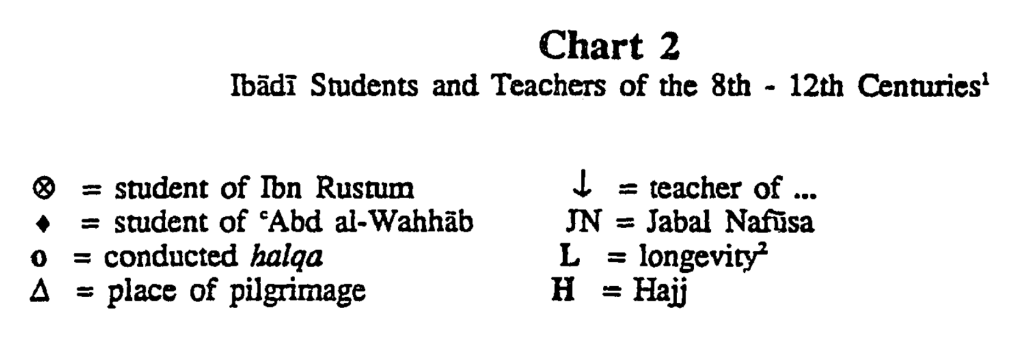
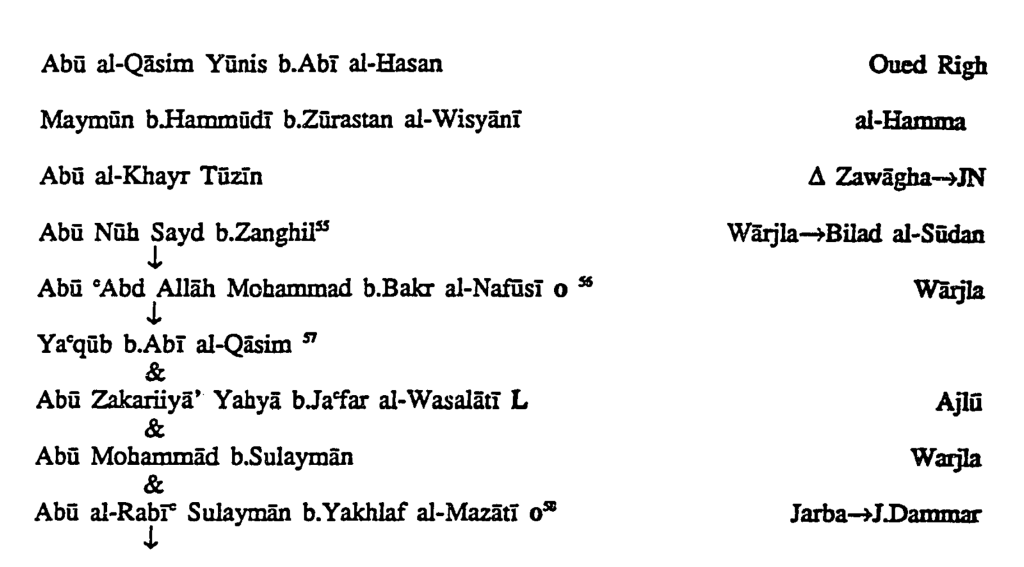
كل رمز سمح لها بإضافة توضيح لنوع العلاقات بين الوقت والفضاء والناس. ثمّ صوّرت هذه العلاقات في أشكال، عبر الوقت (انظر الشكل). لم تسمح لها الأدوات المتوفرة في ذلك الوقت بتصوير العلاقات في الفضاء ولكنه من الواضح أنّها كانت تفكّر هكذا
Each of the symbols allows her to add an additional nuance to the relationships among time, space, and people. She then proceeds to chart these relationships, moving chronologically (below). While the tools she had at her disposal could not allow her visualize relationships spatially, she was clearly already thinking that way.
عندما تحولت الأطروحة إلى كتاب، تراجع التحليل هذا إلى الخلفية. كانت الأطروحة دراسة رائدة، استبقت الدراسات في الإنسانيات الرقمية التي تطورت عبر العقود الثلاثة المقبلة. مع أنّي كنت واعيا بأنني مدين لأعمال د. سافاج، لم أعرف قبل الآن كيف كانت مقاربتي لدراسة الشبكات الاجتماعية مشابهة لمنهجها في الأطروحة. وهي فعلا صدفة عجيبة أنّها بدأت في هذا المسلك بفضل مقابلة د. عمرو خليفة النامي في ميشيغان، حيث ستشجّعني أعمالهما على أن أبدأ بأطروحة دكتوراه في الدراسات الإباضية
In the book version of the thesis, all this analysis of chains would recede into the background. It is a remarkable study and in many ways anticipated studies of chains of transmission and network analysis in digital Islamic humanities that developed over the next three decades. While I always knew how indebted I was to Dr. Savage’s work, I never realized until how much my own approach to network studies was also drawing on a remarkably similar methodology to that of her thesis.
And it is really striking to me that it was an encounter with Dr. Ennami that led her to begin her own work–precisely in the same way that 20 years later it was their books that led me on my own path to begin a dissertation in Ibadi studies.
Notes
- Savage, E. R. (1990). Early medieval ifriqiya, a reassessment of the ibadiyya (Order No. 9235739). Available from ProQuest Dissertations & Theses Global. (303894870). Retrieved from https://www.proquest.com/dissertations-theses/early-medieval-ifriqiya-reassessment-ibadiyya/docview/303894870/se-2
 Ibadi Studies | دراسات إباضية