This summer, I have had the chance to return to Djerba (Tunisia) and work with my colleague from Ibadica, Si Mahfoudh Dahman, on documenting part of another library collection there. This month has been devoted to the collection of a few dozen early print books in Arabic and a handful of manuscripts that belong to the Jāmi’ al-Shaykh, a 16th-century mosque located in the heart of Houmt Souk, Djerba.
هذا الصيف، كانت لديّ الفرصة أن أرجع إلى جزيرة جربة في تونس للتعاون مع زميلي من إيباديكا ، الأستاذ محفوظ دحمان ، في إطار توثيق بعض المكتبات الجربية الحديثة. في هذا الشهر (أوت 2025)، اشتغلنا على مجموعة من الكتب المطبوعة والمخطوطات من مكتبة “جامع الشيخ” في حومة السوق في جربة
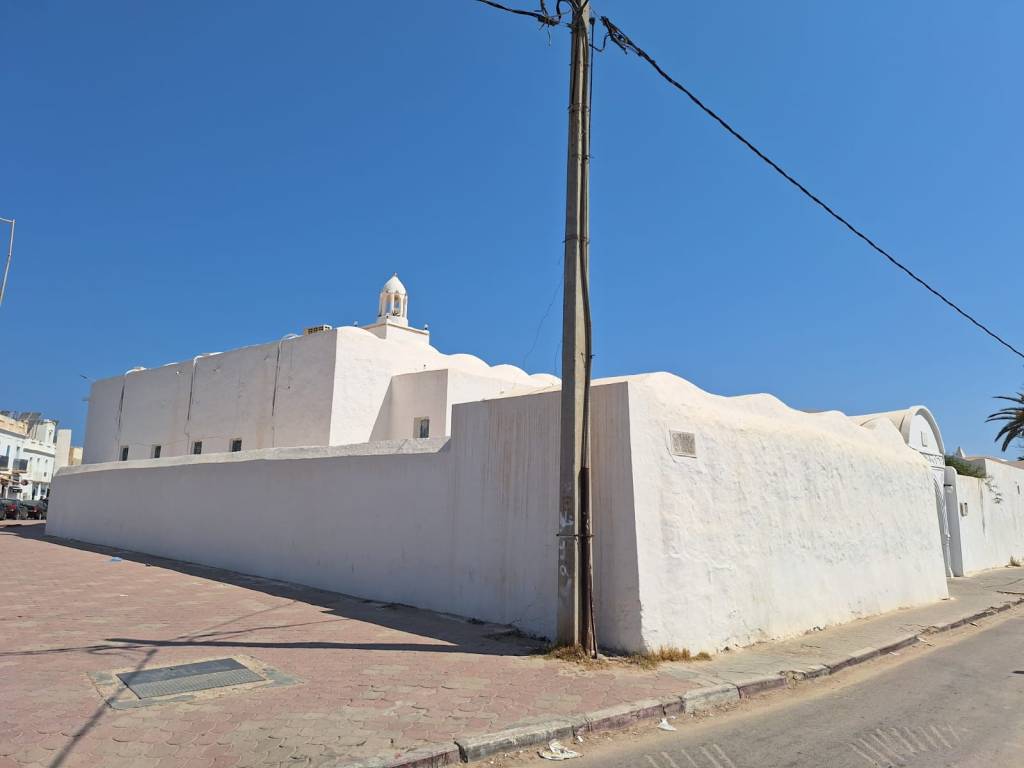
In the mid-to-late 20th century, this Ibadi mosque was home to a weekly meeting of Ibadi scholars known as “Majlis Jāmi’ al-Shaykh”, who gathered on Thursday evening for discussion. This gathering of Djerban Ibadi shaykhs was a staple of 1960s-1980s, still remembered fondly by a handful of people who were present as young men at the time. The collection of books we are documenting testify to the works they read and discussed and we look forward to documenting more of the library to share with the island’s community.
في النصف الثاني من القرن الماضي كان هذا الجامع الإباضي موقعا لاجتماع أسبوعي معروف بـ”مجلس جامع الشيخ”. كان يتمّ الاجتماع كل ليلة الخميس ولا يزال بعض الناس في جربة يتذكّرون هذا الاجتماع بالحنين. تحتوي المكتبة التي نشتغل عليها على الأعمال التي قرأوها المشائخ في الجامع والمراجع التي اعتمدوا عليها في الحوار والنقاش بينهم. يسعدنا أن نوثّق هذه المجموعة لتكون على ذمّة الباحثين والعموم في جزيرة جربة في المستقبل

I wanted to share here one example of these books, which I found especially interesting. It is a lithograph copy of a work entitled the Qanātir al-Khayrāt by a well-known Ibadi scholar of the 8th/14th century, Ismā’īl b. Mūsā al-Jaytālī. Originally from the Jebel Nafusa in what is today northwestern Libya, al-Jaytālī spent much of his life in Djerba and is buried in the cemetery of the island’s Great Mosque. His Qanatir is a 3-volume compendium of different topics, almost encyclopedic in its coverage. The work was an early choice for printing at the first Ibadi-run press that operated out of Cairo in the second half of the 19th century, the al-Baruniyya Press.
أردت أن أكتب هنا عن نموذج من نماذج الكتب التي اطلعنا عليها لأنّه أثار لاهتمامي. الكتاب عبارة عن نسخة مطبوعة (طبعة حجرية) لـ”قناطر الخيرات” للعالم الإباضي المشهور إسماعيل بن موسى الجيطالي (ت ق8/14). أصلا من جبل نفوسة في ليبيا، بقي الجيطالي سنوات طويلة في جربة حيث توفى ودُفن في مقبرة الجامع الكبير. كان كتابه “قناطر الخيرات” مطبوعا في 3 مجلّدات كبيرة ويغطّي مواضيع كثيرة. كان الكتاب من أوائل إخراجات المطبعة الإباضية الأولى وهي المطبعة البارونية في القاهرة في النصف الثاني من القرن التاسع عشر الميلادي
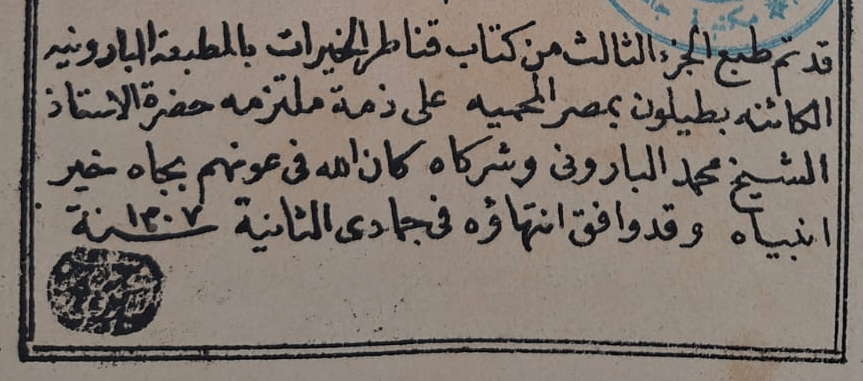
This copy is from that early period of printing, appearing after 1307 AH / 1890 CE, as we learn from the colophon at the end of this volume (photo).
.طُبعت هذه النسخة في عام 1307هـ/1890م كما نقرأ في حرد متن الكتاب هنا (انظر الصورة)
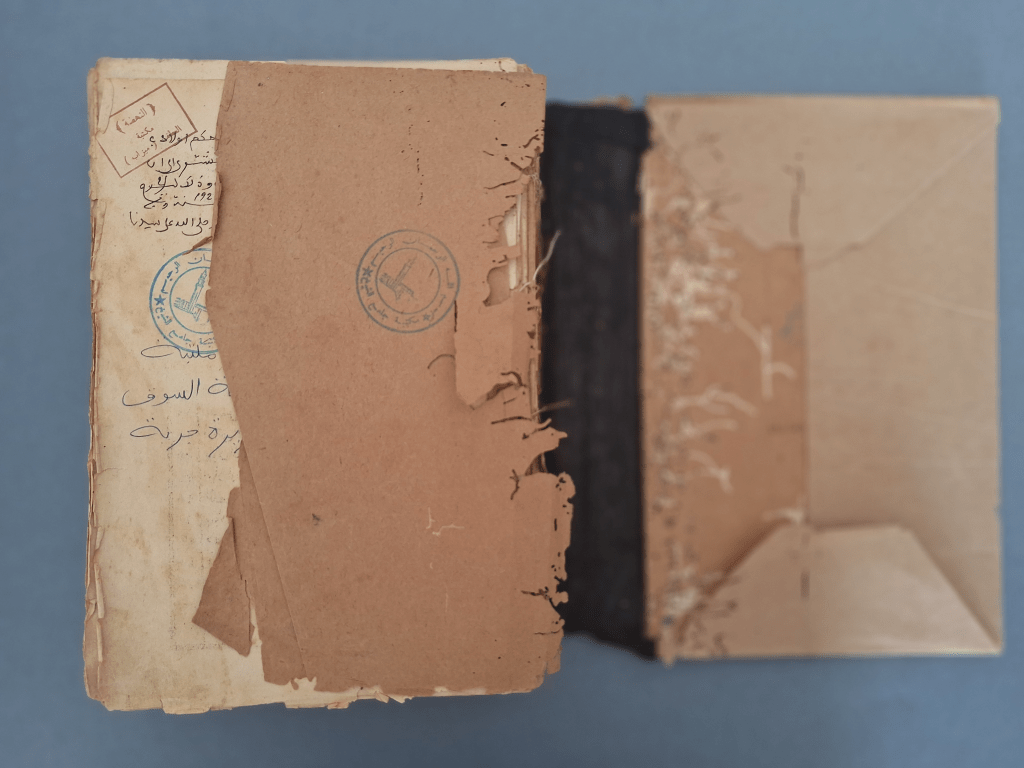
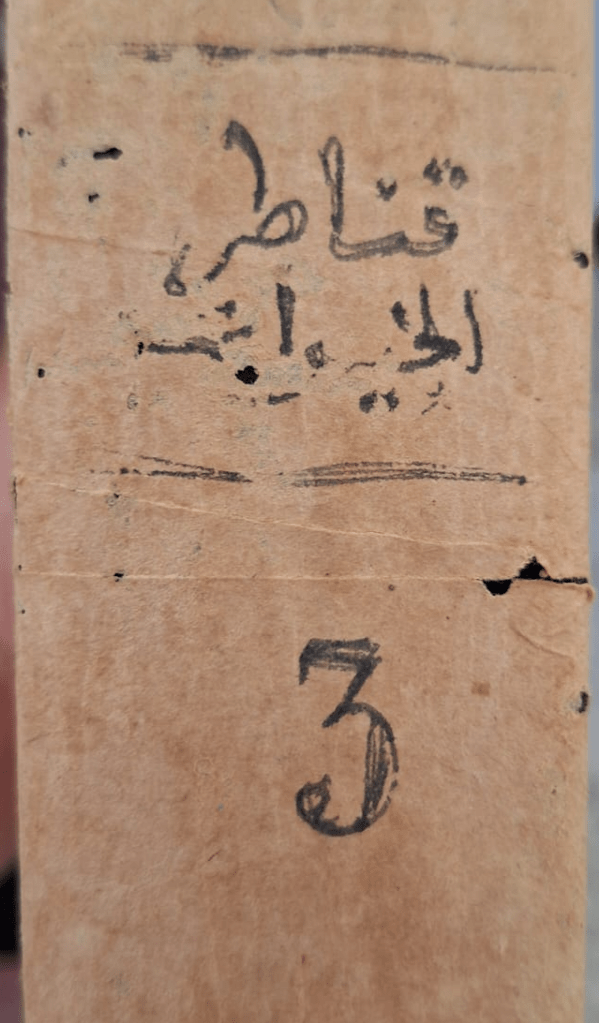
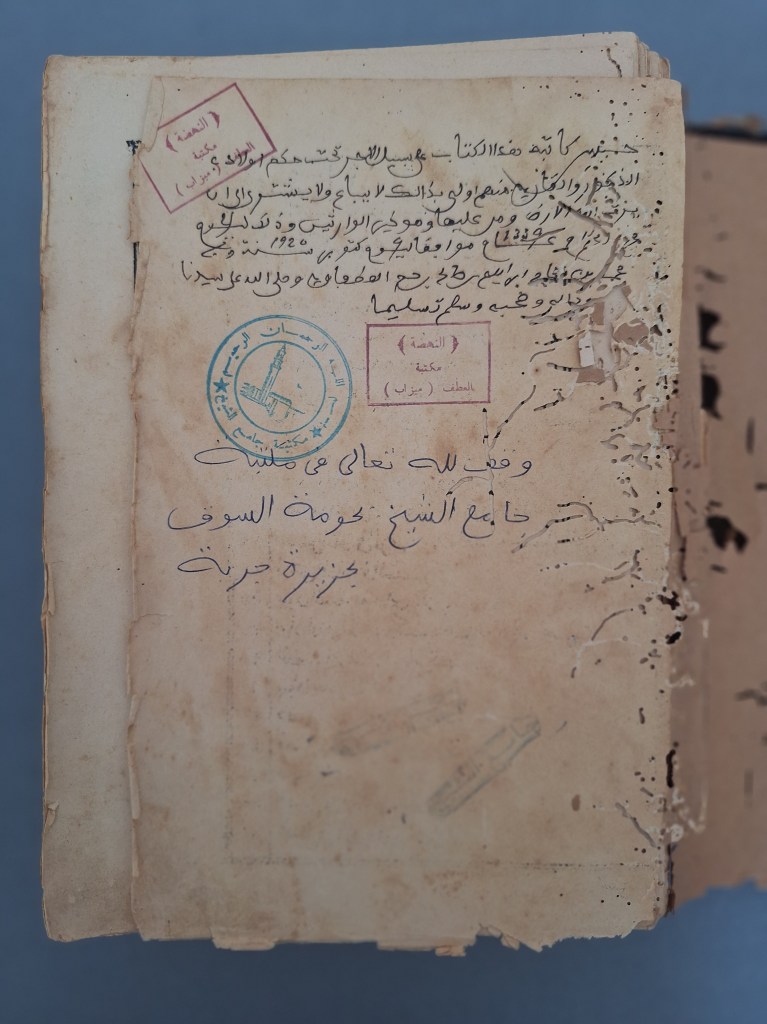
The volume was previously encased in boards covered in machine-made marbled paper, bound together by black cloth on the book’s back. These days, it is has been eaten to pieces by pests. The boards are now wrapped in brown paper, with a handwritten label on the spine (photo).
كان الكتاب مجلّدا بالكرتون ومغطّيا بالورق الرخامي المصنّع. وكان الظهر مغلّفا بالقماش الأسود. اليوم، ، حالة حفظه ليست ممتازة لأنّ الحشرات أكلته إلى درجة كبيرة. لوحات التجليد مغلّف بالورق البني وعلى ظهر الكتاب يوجد عنوانه مكتوب بخط اليد (انظر الصورة).
The features I love about this book are (1) its ownership history on the first page and (2) the loose papers found inside the book, left there by previous readers.
ما أعجبني في الكتاب : (1) النصوص المتعلّقة بملك الكتاب المذكور في الصفحة الأولى و(2) الأوراق المتفرقة المتروكة بين صفحات الكتاب من قبل القرّاء السابقين
The ownership history begins in 1920, thirty years after the book was originally printed. By that point, it appears to have made its way to the Mzab Valley in Algeria, where it was endowed by Muhammad b. al-Hājj Ibrāhim b. Sālih b. Hamm al-‘Atfāwī in October 1920. There was a regular flow of Mzabi students to and from Cairo in these decades, so many could have purchased it in Cairo and brought it there. Alternatively, it might have been purchased in Tunis at the Makatabat al-Istiqāma by one of the Mzabis studying there. Although he doesn’t mention where he is endowing the book, the purple ink stamps on the same page suggest it entered the collection of the al-Nahda Library in Ateuf, Mzab. Indeed, a large number of the books in the collection came to Djerba from the town of Ateuf and from Guerara, a city to the northeast of the Mzab.
يبدأ تاريخ ملك النسخة من عام 1920م، حوالي 30 سنة بعد طباعته في مصر القاهرة. في تلك السنة، كان يوجد الكتاب في وادي المزاب في الجزائر حيث حبّسه (أوقفه) الشيخ محمد بن الحاج إبراهيم بن صالح من حمّ العطفاوي في شهر أكتوبر. كان يوجد تيار مستمرّ من الطلبة المزابيين إلي القاهرة في آخر القرن التاسع عشر وبداية القرن العشرين وربّما اشتراه أحد هؤلاء الطلبة في القاهرة وجاء به إلى مدينة العطف في المزاب. يمكن أيضا أنّ النسخة كانت للبيع في “مكتبة الاستقامة” ، المكتبة الإباضية في مدينة تونس، واشتراها أحد الطلبة المزابيين هنالك. مع أنّ النص لم يذكر الخزانة التي حبّس الكتاب فيها، الأرجح أنّها كانت “مكتبة النهضة” في مدينة العطف المزابية لأنّنا نجد في نفس الصفحة ختم تلك المكتبة بالحبر البنفسجي (انظر الصورة). فعلا، الكثير من الكتب في المجموعة يرجع أصلها إلى مدينة العطف أو إلى مدينة القرارة التي تقع شمال شرق المزاب
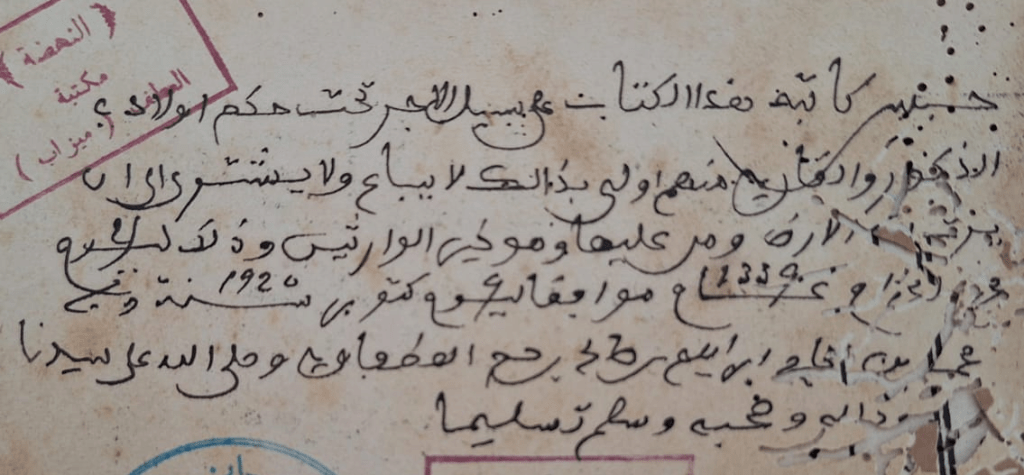
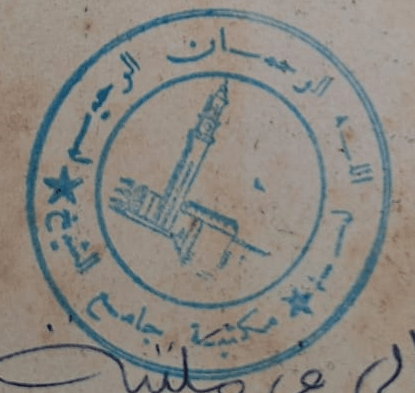
Now, like many of the books in this particular collection, this particular volume somehow came to Djerba from the Mzab valley and ended up at the Jami’ al-Shaykh. We will need some additional research both inside and outside the collection to figure out how it arrived in Djerba but the same page makes it clear they became part of an endowed collection there in the 20th century. The page bears both the blue ink stamp of the mosque (photo) and a handwritten endowment statement written in blue ink.
لا نعرف متى وكيف وصل الكتاب إلى جربة ولكنه بطريقة أو أخرى دخل إلى خزانة جامع الشيخ حيث حُبّس مرّة أخرى. يحتاج هذا إلى البحث لنعرف كيف وصل إلى هنالك ولكنّ تحبيسه ثابت لأنّ تحت نص التحبيس الأول يوجد نصّ للتحبيس الثاني بالحبر الأزرق وبجانبه ختم الجامعة (انظر الصورة)
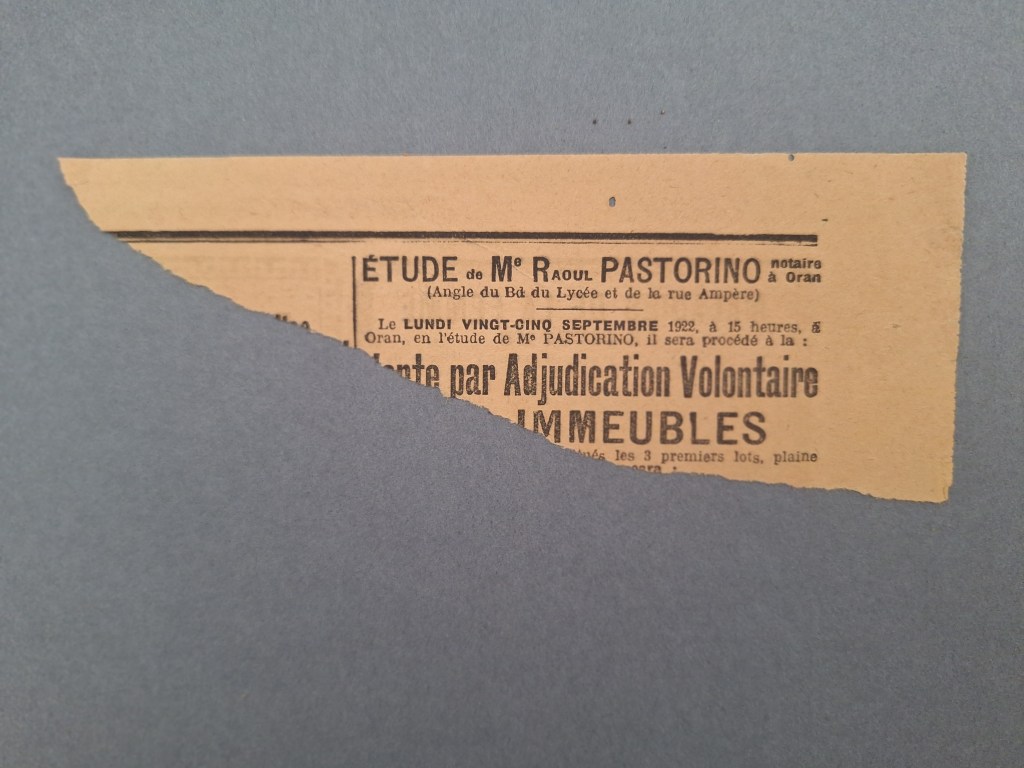
The second set of information about this book that interests me is the collection of papers that were placed between its pages, probably as bookmarks for their last reader(s). The first is a small fragment of French-language newspaper from Oran, Algeria, bearing the date 1922. Since this was two years after the endowment statement, presumably the reader who placed this in the book did so in the town of Ateuf (Algeria) some time in the 1920s. The second item is a sheet of lined notebook paper, bearing notes and questions written in a blue ink pen. This may well have been used during the study and discussion sessions after the books arrival in Djerba–perhaps it served as a list to question young learners?
المعلومة الثانية التي أثارت لاهتمامي في هذا الكتاب هي مجموعة الأوراق المتفرقة التي توجد بين صفحات المجلد. الورقة الأولى هي عبارة عن قطعة من جريدة فرنسية من مدينة وهران في الجزائر مؤرّخة بسنة 1922. بما أنها سنتان فقط بعد نص الوقفية، من المفترض أنّ القارئ الذي وضعها في الكتاب كان موجودا في مدينة العطف في العشرينات من القرن الماضي. أما الورقة الثانية في هي قائمة من الملاحظات والأسئلة مكتوبة بخط اليد بقلم حبري أزرق حديث. ربما هذه الأسئلة كانت مسجّلة للحوار في جامع الشيخ في فترة من فترات اجتماعات ليلة الخميس؟
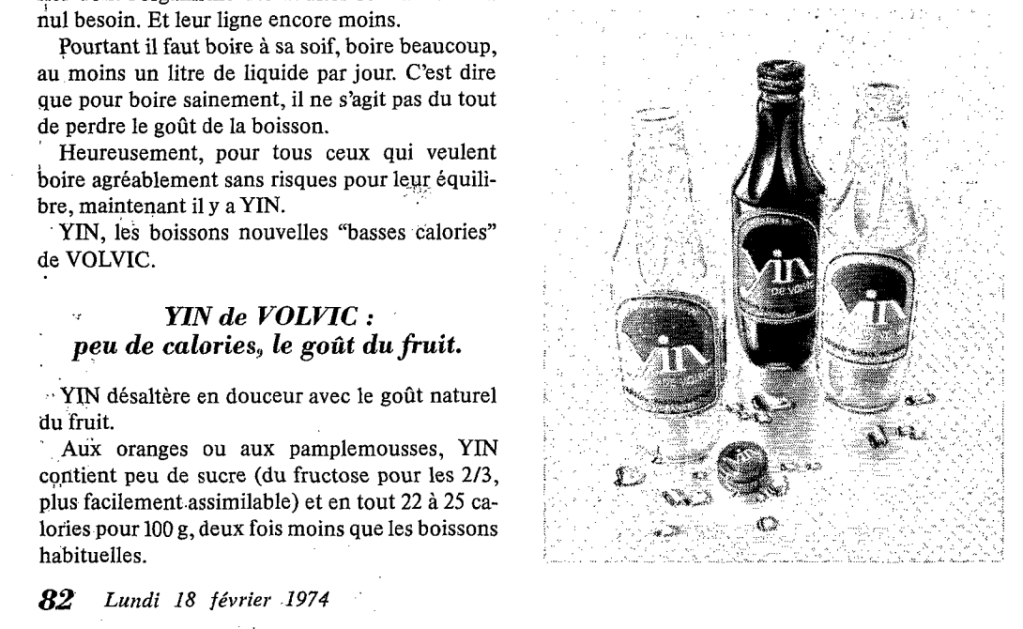
In any case, the final item in the book certainly comes from its time in Djerba. This small paper bearing a short missive, which is not dated but is written piece of stationary for “Yin de Volvic”, low-calorie juices sold by Volvic in the mid-1970s. The letter is addressed to Shaykh Gasim Gouja and Shaykh Bachir Gouja. The former was a prominent member of the Majlis Jami’ al-Shaykh and the latter was the owner of a small but important collection of manuscripts. I wrote about one of the books in that collection last summer.
على كل حال، الورقة الأخيرة في الكتاب دخلته في الفترة الجربية في مسيرة المجلد لأنّ الورقة من شركة “ڤولفيك” إعلانا بمشروبات عصير جديدة كانت متوفرة في السوق في أواسط السبعينيات من القرن الماضي وجه الورقة نفسها تحمل جوابا قصيرا موجّها للشيخَيْن الجربيين قاسم قوجة وبشير قوجة رحمهما الله. كان الأول من مشائخ “مجلس جامع الشيخ” والثاني كان صاحب مجموعة صغيرة من المخطوطات والمطبوعات الإباضية كتبت عنها في الصيف الماضي

The letter, sent by Ali Bou Ali, is request the presence of the two shaykhs that evening at the home of the late Milad Bin ‘Umar al-Mizrani to read prayers as part of his funeral service. It is a touching message, representing a snapshot in the lives of these three men and reminding us that scholars served as more than Imams and writers. They also served the community by officiating at weddings, funerals, and religious events of all kinds.
الرسالة بخط يد شخص اسمه علي بوعلي، طالبا فيها حضور الشيخيْن في تلك الليلة في بيت المرحوم ميلاد بن عمر المزراني (من حومة مزراية في جربة) بمناسبة وفاته. تمثّل الرسالة لمسة تاريخية في لحظة حياة المشائخ وتذكّرنا بأنّ أدوارهم الاجتماعية لم تقتصر على التأليف والوعظ والتدريس بل وإنما أمتدّت إلى خدمات اجتماعية من ضمنها المشاركة في الأعراس والجنائز والمناسبات الدينية بكل أنواعها
As we continue moving through this collection this summer and writing a short inventory of the collection, I look forward to discovering future snapshots of modern Djerban history in the pages of the library’s books.
سوف نستمرّ في دراسة المجموعة ونحضّر جردا أوليا لها ونحن متحمّسون للتعلم أكثر عن تاريخ مكتبة جامع الشيخ ورحلات كتبها الحديثة
 Ibadi Studies | دراسات إباضية